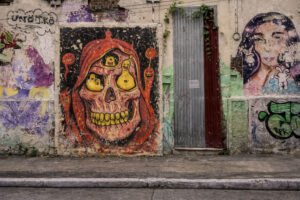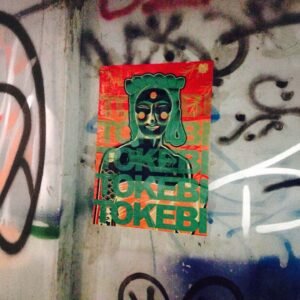

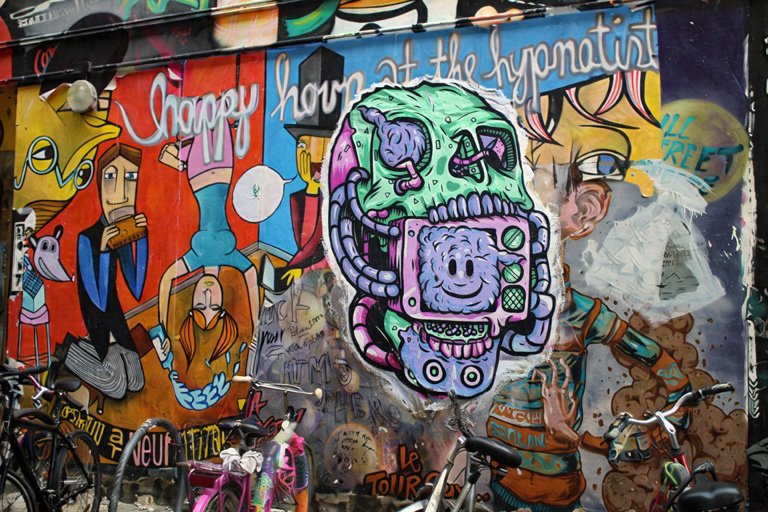
Berlin occupies a unique position in global street art culture. Unlike cities where urban art is tightly regulated or heavily commercialized, Berlin continues to function as a living laboratory for experimentation, dissent, and visual dialogue in public space. Its relevance does not come from a single landmark or institution, but from a layered ecosystem of neighborhoods, histories, and attitudes that allow street art to exist as culture rather than decoration.
This article explains why Berlin remains essential for street artists, how its art districts sustain relevance, and why the city continues to influence contemporary urban art worldwide.
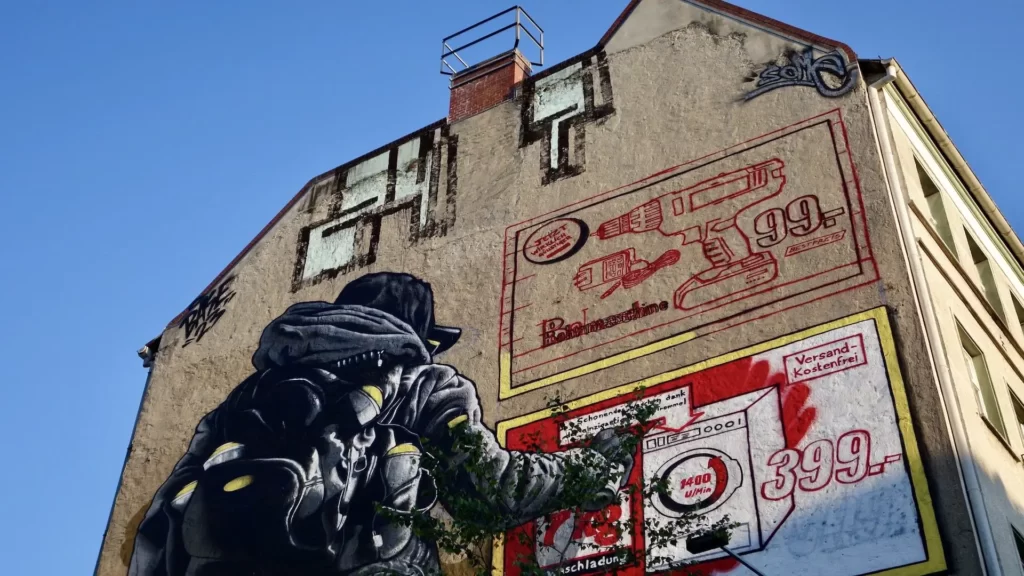
Berlin’s Historical Relationship With Public Expression
Berlin’s street art culture cannot be separated from its history. Decades of division, reconstruction, and social change turned walls into political and emotional surfaces. Public space in Berlin has long been contested, making it fertile ground for visual expression.
Unlike cities where street art emerged primarily as aesthetic intervention, in Berlin it developed as communication. Murals, stencils, and tags carried political, personal, and cultural messages. This legacy still shapes how the city treats urban art today; tolerance is higher, and experimentation is expected rather than suppressed.
Art Districts as Cultural Infrastructure
Berlin’s relevance is reinforced by its decentralized art districts. Rather than a single curated zone, the city offers multiple neighborhoods where street culture thrives organically. Areas such as Kreuzberg, Friedrichshain, and Neukölln function as open systems where artists, musicians, designers, and activists coexist.
This decentralization contrasts with more curated districts like Wynwood Walls, where murals are managed as destinations. Both models are valid, but Berlin’s strength lies in its fluidity. Art districts here are not fixed; they evolve, migrate, and overlap.
This dynamic nature reinforces Berlin’s role in discussions about what art districts truly are; not just places to visit, but environments that support continuous cultural production.
Why Street Artists Gravitate to Berlin
Several factors consistently attract street artists to Berlin:
- Relative tolerance toward unsanctioned work compared to other major cities
- Affordable living and studio spaces, historically lower than other capitals
- A strong tradition of counterculture and political expression
- International communities that normalize cross-cultural influence
These conditions allow artists to focus on development rather than constant self-censorship. Berlin does not demand polish; it rewards honesty and persistence.
Berlin in the Global Urban Art Network
Berlin functions as a node within a global network of urban art cities. Artists often move between Berlin, cities in Latin America, and Asian hubs such as Hongdae, where youth culture and independent art scenes intersect. These cities exchange aesthetics, techniques, and philosophies.
This circulation reinforces the idea explored in discussions on how urban art became a global cultural language. Berlin absorbs influences and redistributes them, contributing to a shared visual vocabulary rather than enforcing a single style.
Influential Street Artists Associated With Berlin
Berlin’s scene is defined by artists who treat the city as an evolving canvas rather than a backdrop. Among the most influential figures:
- BLU
Known for politically charged murals, BLU’s large-scale works in Berlin became iconic examples of socially engaged street art.
Website: https://www.blublu.org - El Bocho
Recognized for his recurring characters and emotional humor, El Bocho’s work demonstrates the power of repetition in urban identity.
Website: https://www.elbocho.net - Alias
Alias was known for stencil-based works addressing mortality and memory, themes deeply embedded in Berlin’s visual culture. - XOOOOX
Combining fashion imagery and urban critique, XOOOOX bridges commercial aesthetics and street presence.
Website: https://www.xooooox.com - 1UP Crew
A graffiti collective emphasizing scale, repetition, and collective identity, reinforcing graffiti’s role as presence rather than commodity.
Website: https://www.1upcrew.com
These artists illustrate Berlin’s diversity; political, humorous, abstract, and collective approaches coexist without hierarchy.
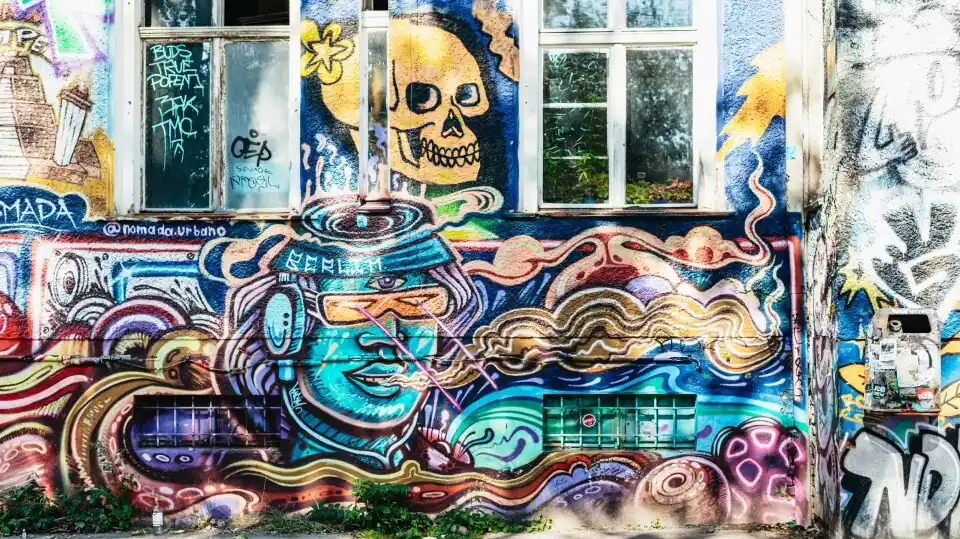
Berlin Versus Curated Urban Art Models
As urban art gained mainstream acceptance, many cities adopted curated approaches to murals and districts. While this increases visibility, it can limit experimentation. Berlin maintains relevance by resisting total formalization.
This resistance allows informal practices such as tagging, wheatpaste, and ephemeral interventions to coexist with large murals. The city’s visual landscape reflects layers of intention and improvisation, reinforcing authenticity.
Street Art, Repetition, and Identity in Berlin
Repetition plays a key role in Berlin’s street culture. Characters, symbols, and tags appear repeatedly across neighborhoods, embedding themselves into the city’s visual memory. This repetition mirrors broader street culture mechanisms where symbols gain meaning through persistence rather than explanation.
This approach connects directly to discussions around repetition and symbols in street culture, reinforcing how identity is constructed visually over time.
Why Berlin Continues to Matter
Berlin remains relevant because it is unresolved. It is not finished, polished, or fully institutionalized. Street artists value this openness. The city allows work to exist without immediate commodification, preserving the experimental core of urban art.
As long as Berlin continues to provide space for dissent, repetition, and symbolic communication, it will remain a reference point for street artists worldwide.
Berlin’s relevance in street art is not based on trends or marketing. It is based on infrastructure, history, and attitude. Its art districts function as living systems rather than showcases. Its artists prioritize message, repetition, and presence over permanence.
In a global landscape where urban art is increasingly curated, Berlin stands apart as a city where street art still breathes, changes, and argues with the walls it inhabits. That ongoing tension is precisely why Berlin continues to matter.
Written by TOKEBI, an independent visual artist exploring urban aesthetics and contemporary mythologies.