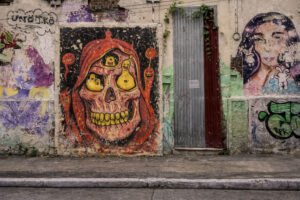

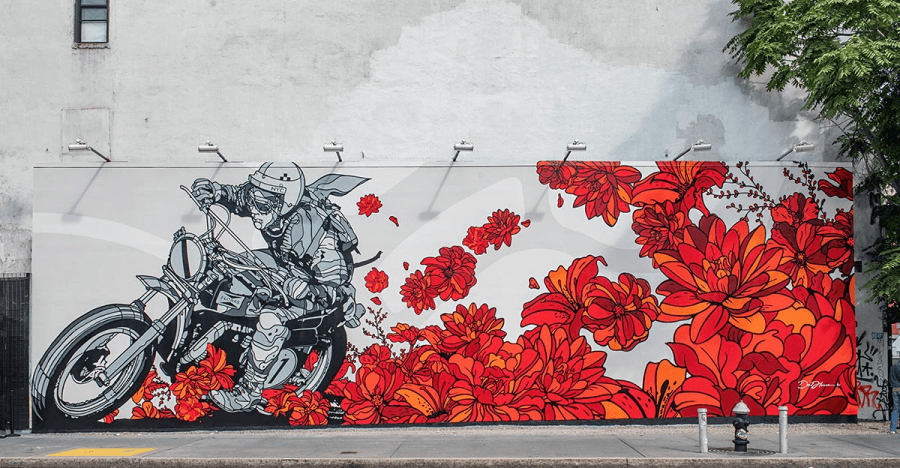
Wynwood Walls is one of the most influential urban art destinations in the world. More than a collection of murals, it represents a turning point in how graffiti, street art, and lowbrow aesthetics entered mainstream cultural recognition. What was once considered informal or subversive visual expression is now curated, preserved, and celebrated as contemporary art.
Understanding Wynwood Walls requires understanding murals as a medium, graffiti as a cultural language, and the role of curation in transforming urban art into a globally visible movement.
The Origins of Wynwood Walls
Wynwood Walls was founded in 2009 as an open-air museum dedicated to large-scale murals. The project transformed a former warehouse district into a curated outdoor exhibition space, inviting artists from around the world to paint permanent and semi-permanent works on industrial walls.
Unlike spontaneous street art zones, Wynwood Walls was conceived with intentional curation. Artists were selected not only for technical skill but for cultural relevance and stylistic impact. This approach elevated murals from ephemeral street expression to destination-based contemporary art.
Murals as a Legitimate Art Form
Murals have historically served political, cultural, and communal purposes. In urban contexts, they reclaim neglected spaces and turn them into visual landmarks. At Wynwood Walls, murals function as both artworks and cultural signals; they announce that public space can be a site of serious artistic discourse.
The scale of murals allows artists to develop complex visual narratives. Unlike gallery pieces constrained by walls and frames, murals interact with architecture, light, and movement. Viewers experience them bodily, not just visually. This immersive quality is one reason murals have become central to contemporary urban art.
Graffiti, Lowbrow Art, and Cultural Recognition
Graffiti and lowbrow art were long excluded from traditional art institutions. Their association with youth culture, commerce, illustration, and street aesthetics placed them outside academic hierarchies. Wynwood Walls played a key role in changing that perception.
By placing graffiti writers and muralists alongside fine artists, the project blurred distinctions between “high” and “low” art. This convergence validated street-based practices without stripping them of their visual intensity. Lowbrow art, characterized by bold imagery, pop references, and accessible symbolism, found a global audience through this exposure.
Wynwood Walls is curated and managed by Goldman Global Arts, a cultural lead by Jessica Goldman Srebnick. The organization specializes in placemaking through art, focusing on how creative interventions can transform urban environments. Goldman Global Arts oversees artist selection, project coordination, and long-term vision for Wynwood Walls. Their approach emphasizes thoughtful curation rather than uncontrolled saturation. This balance is critical; it preserves artistic credibility while maintaining public accessibility.
Goldman Global Arts operates primarily from Miami and is associated with multiple cultural projects that integrate art, architecture, and urban development. Their curatorial role distinguishes Wynwood Walls from unregulated mural districts.
Influential Artists Featured at Wynwood Walls
Over the years, Wynwood Walls has hosted many internationally recognized artists. Among the most notable:
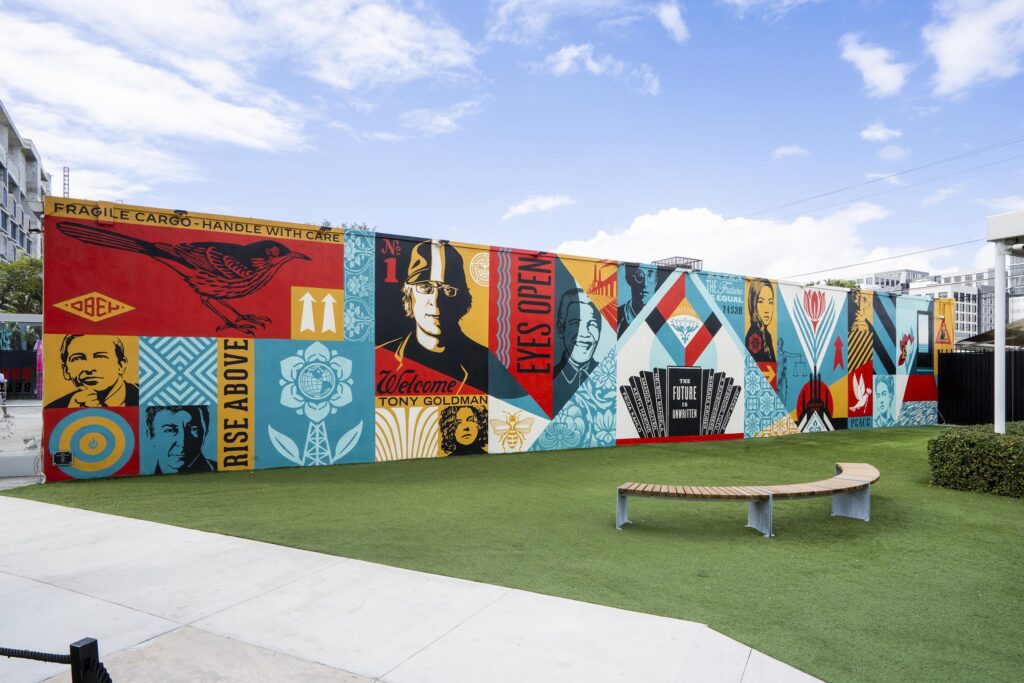
- Shepard Fairey
Known for blending propaganda aesthetics with political commentary, Fairey’s work bridges street art and graphic design. His presence at Wynwood reinforced the district’s global relevance. - Os Gemeos
This Brazilian twin duo is celebrated for their surreal, colorful characters rooted in folk culture and hip-hop. Their murals exemplify how local narratives can resonate internationally. - RETNA
RETNA’s calligraphic style merges graffiti, ancient scripts, and abstraction. His work challenges the boundary between text and image, a recurring theme in contemporary urban art. - Futura
A foundational figure in graffiti history, Futura’s abstract approach influenced generations of artists. His inclusion highlights Wynwood’s connection to the roots of street art culture.
These artists demonstrate the stylistic range embraced by Wynwood Walls, from political graphic language to abstract graffiti and surreal muralism.
Why Wynwood Made Urban Art Visible
Wynwood succeeded because it aligned three factors: location, curation, and documentation. Situated in a walkable district, the murals form a cohesive experience rather than isolated works. Curated selection ensured quality and diversity. Constant photographic circulation through digital platforms amplified visibility.
As images of Wynwood murals spread globally, the district became synonymous with contemporary street art. This visibility normalized graffiti-derived aesthetics in broader cultural contexts such as fashion, branding, and interior design.
Additional Art Galleries to Visit in Wynwood
Beyond the outdoor walls, Wynwood hosts respected galleries that contribute to its artistic ecosystem:
- Spinello Projects
A contemporary gallery known for conceptually driven exhibitions that often intersect with pop and urban aesthetics. - Locust Projects
A non-profit space supporting experimental and site-specific installations, offering a counterpoint to commercial galleries.
These venues complement Wynwood Walls by providing indoor contexts for contemporary and experimental art.
Wynwood Walls represents a critical moment in the evolution of urban art. By legitimizing murals, embracing graffiti writers, and elevating lowbrow aesthetics through thoughtful curation, it reshaped how street art is perceived worldwide. Supported by an ecosystem of artists, curators, photographers, filmmakers, entrepreneurs, and the million of tourists walking Wynwood has transformed a local district into an international reference point.
Today, Wynwood Walls stands as evidence that urban art is not peripheral. It is central to contemporary visual culture, capable of shaping cities, redefining artistic value, and connecting global audiences through walls that speak without translation.
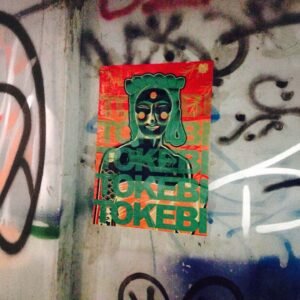
Written by TOKEBI, an independent visual artist exploring urban aesthetics and contemporary mythologies.”